ServicesStair Flooring
Stair Flooring in Humble
Few spots in your home get walked on as often as the stairs, and they show wear fast. We strip the old covering, tighten loose or noisy treads, then install new treads, risers and nosing that tie into the flooring above and below.
What stair flooring is, and when it makes sense
Stair flooring means covering each tread, riser and nose so the staircase is safe to walk and looks like it belongs with the rest of the house. It is slower work than an open room. Every step gets measured, cut and fastened one at a time.
It is usually the right call when you are putting new floors downstairs or upstairs and the old carpet on the stairs no longer matches. It also makes sense when the carpet is worn through at the nose, or a few steps squeak every time someone walks down at night.
Here is the short version. Most two-story homes around Humble were built with carpet over plain plywood or particleboard treads. That base was never meant to be seen. So the question is usually not just which material you like, but what has to happen underneath so it lasts.
What the job includes
- Tear-out down to the framing
- We remove carpet, pad, tack strip and every staple. Leftover staples and glue lumps telegraph through new treads, so we scrape and sand each step flat.
- Fixing squeaks and loose steps
- Squeaks come from treads rubbing on nails or stringers. We screw and glue loose treads down before covering them. Once new flooring is on, that fix is much harder to reach.
- Treads, risers and nosing
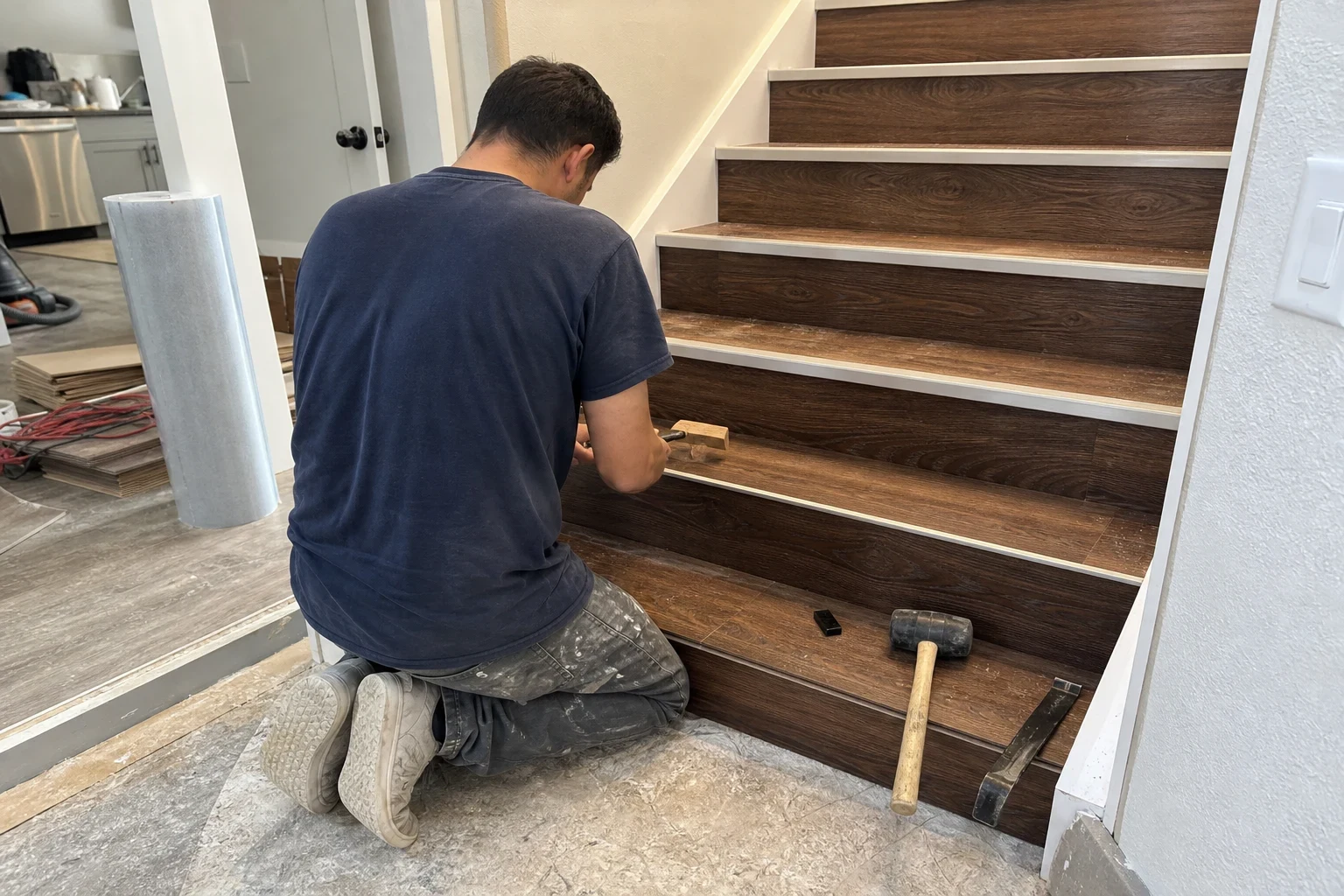
- We install new hardwood treads, or cover the existing steps with luxury vinyl plank or laminate and a matching stair nose. Risers can match the treads or be painted white for contrast.
- Carpet on stairs
- If you want carpet, we can do a waterfall style that drapes over the nose, or a tighter wrapped style that follows the shape of each step. We use pad cut to fit each tread.
- Clean transitions at landings
- The top step and any landing get a nose and trim that meet your hallway floor cleanly, with no lip to catch a toe.
- Insured, with a warranty
- Our stair work carries the same 1-year workmanship warranty on all installations that we give every job. We are insured, and we cover rails and nearby walls before any cutting starts.
Signs your stairs need new flooring
Bare spots on the step edges
Carpet thins out first where your heel rolls over the edge of a step. When backing or pad starts showing, no amount of cleaning brings it back.
A step that squeaks or shifts
Movement under your foot means a fastener has worked loose or a tread has split. It only gets worse, and a loose step is easy to trip on.
New floors that end at the staircase
Fresh vinyl plank or hardwood on the first floor makes tired stair carpet look out of place. Redoing the steps ties the rooms together.
A rocking or cracked nose piece
If the front trim on a step wobbles or has a broken edge, treat it as a safety issue. Gluing it back rarely holds, so we replace it.
Stains and smells from pets
Carpet on steps holds onto accidents and is tough to clean deep. A hard surface wipes clean in a minute.
How a stair job runs
- 1
Look and measure
We check each step for squeaks, movement and what is under the carpet. Stairs are rarely perfectly even, so every tread gets its own measurement.
- 2
Tear-out and prep
We pull the old covering, clear staples and tack strip, then screw down loose treads. Dust stays near the stairs, and we cover nearby floors.
- 3
Cut and install step by step
Each tread, riser and nose is cut to fit that step. We usually work top down so there is always a clear way off the stairs.
- 4
Walk it with you
We walk the stairs with you, check every step for movement, clean up and haul the old material away. Most staircases take one to two days, depending on material and how much repair the steps need.
What sets the cost
Most of a stair quote is labor, so we count steps instead of measuring square footage. These are the things that raise or lower the total. We explain each one when you call for your quote.
- How many steps, and what shape
- A straight flight is the simplest. Pie-shaped turns, landings and open sides each add cutting and trim work.
- Material
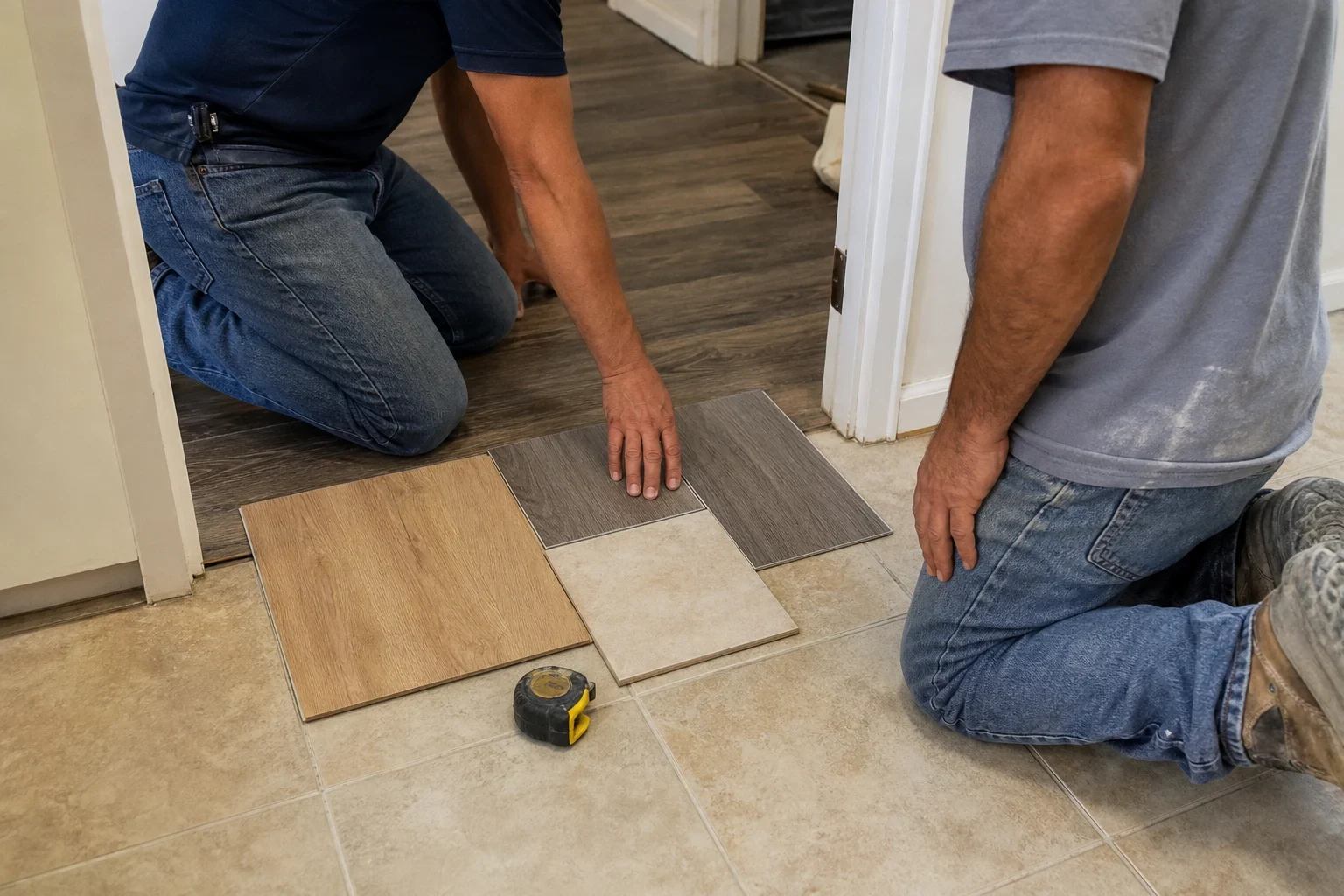
- Carpet usually goes in fastest. Vinyl plank and laminate need a stair nose on every step. Solid hardwood treads take the most cutting and finishing.
- What is under the old covering
- Particleboard, split treads or thick glue may mean replacing boards or doing extra prep before the new surface goes on.
- Risers and railings
- Covering or painting risers, and fitting tight around balusters, adds time on each step.
Stair flooring questions
Something not covered here? (346) 253-1583
Will luxury vinyl plank or laminate hold up on steps?
It holds up well when it goes over a solid, flat step. We glue a piece to each tread and finish the edge with a matching nose so nothing flexes. Plenty of people pick it so the stairs match the new floor downstairs.
What is under my stair carpet?
In most homes it is plywood or particleboard that was never meant to show. That is why we do not just stain what is there. Those steps get covered with new treads or a hard surface.
Will the squeaks be gone?
Most noise comes from loose treads, and we screw and glue those during prep. That takes care of nearly all of it. If a squeak is coming from the framing underneath, we will show you what we found and explain the options.
Can we still get up and down while you work?
For the most part, yes. We go one section at a time and leave a way through when we can. Some glued steps need a few hours before you put full weight on them, and we will point those out.
Do you match the stairs to the floor I already have?
We get as close as the product line allows. If you are also redoing a room, doing the stairs at the same time is easiest, because the hardwood flooring or vinyl plank comes from the same batch.
Get a straight answer on your stairs
Give us a rough count of your steps, what covers them today and the look you are after. We will explain the work involved and what drives the cost.