ServicesTile Flooring
Tile Flooring in Humble, Set Flat From the Slab Up
Porcelain and ceramic tile for your kitchen, bathroom, entry or open living area. Tile usually fails because of what sits underneath it, so we look at your floor and fix the base before setting anything. You hear plainly what your floor needs and why.
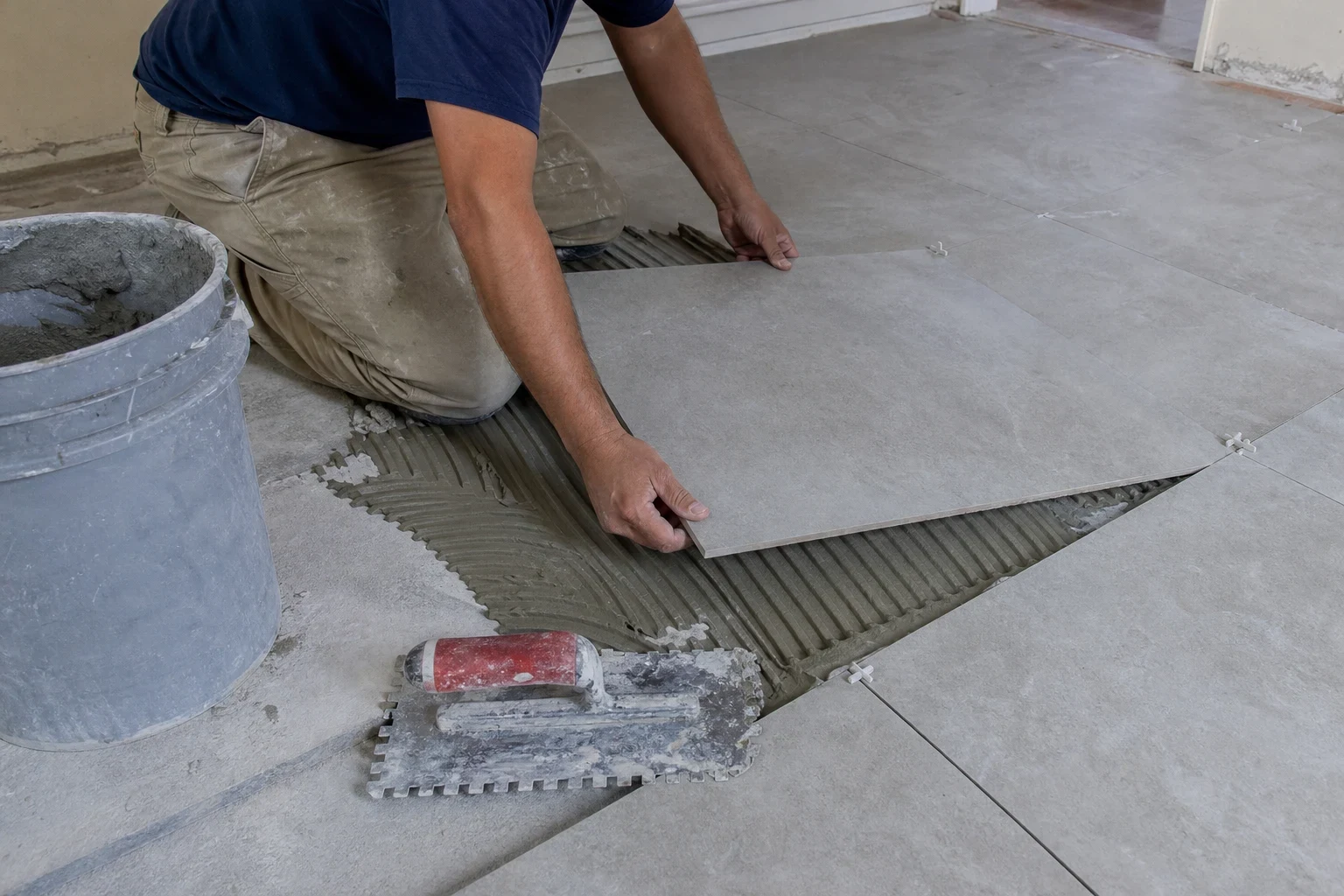
When Tile Is the Right Floor
Tile is hard to beat in rooms that see water, mud and pets. It does not swell when it gets wet, it does not scratch the way wood does, and porcelain holds its color for decades. The tradeoff is that it feels hard and cold underfoot, and it is unforgiving of a bad base.
That last part is where most jobs go right or wrong. Most homes in this area are built on concrete slabs, and the clay ground below them moves between the wet and dry months. Over the years that leaves fine cracks and dips in the concrete. Tile laid straight over those flaws cracks, comes loose, and the grout breaks down. We flatten the floor and treat cracks before any tile is set.
If you want the look of tile with a softer, warmer feel, we will tell you so and talk through luxury vinyl tile instead. Some people are better served by it.
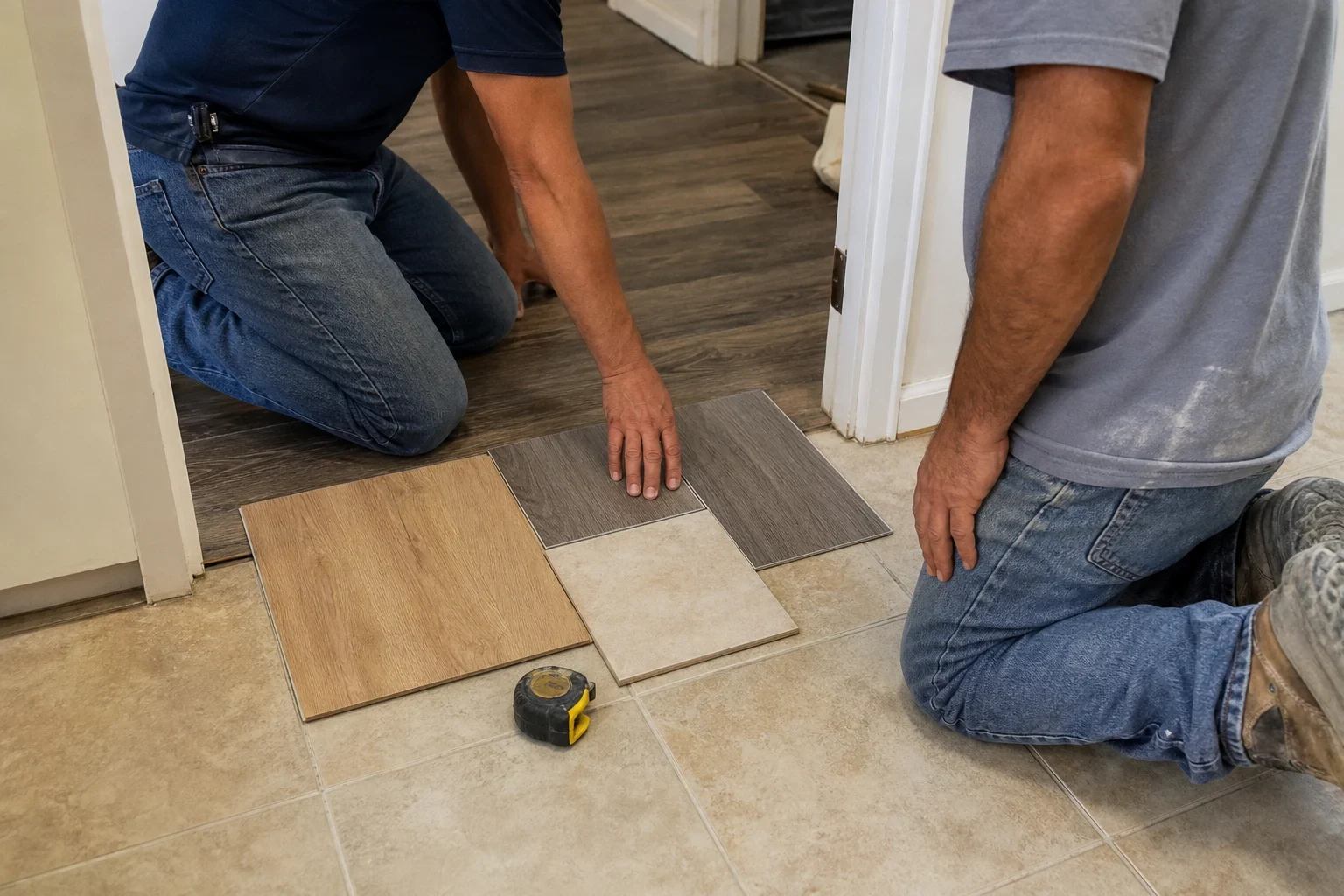
What a Tile Job Includes
- 01
Old floor removal
We pull up the existing carpet, vinyl, laminate or tile and scrape the slab clean. Old tile removal is loud and dusty, so we seal off doorways and vents before we start.
- 02
Slab check and flattening
We run a long straightedge across the floor to find highs and lows. Low spots get filled with patch or self-leveler, high spots get ground down. Large tiles need a flatter floor than small ones.
- 03
Crack isolation membrane
Over cracks in the slab we lay a membrane that lets the concrete move a little without passing that movement up into the tile.
- 04
Setting the tile
We lay out the room so cuts land at the walls, not in the middle of a doorway. Each tile goes into thinset with full coverage on the back, and we use a leveling system on large-format tile to keep the edges even.
- 05
Grout, trim and transitions
We grout, clean the haze off, and finish edges where tile meets carpet, wood or another floor. Baseboards go back on and the room is swept out.
Questions about Tile Flooring?
Call(346) 253-1583Signs Your Tile Floor Needs Replacing
Cracks that line up
One cracked tile can be a dropped pan. A crack running across several tiles in a line usually means the slab cracked underneath and the tile went with it.
A dead, empty sound
Knock lightly on a few tiles with your knuckle or the end of a screwdriver. Solid tile sounds firm. If one sounds dull and empty, its bond to the thinset has failed, and it is on its way to cracking or lifting.
Grout breaking down
When grout crumbles or goes missing, water finds its way beneath the tile. Next to a tub, shower or kitchen sink, fix it before the damage widens.
Tiles that rock or click
If a tile moves when you step on it, it is loose. Loose tiles chip their neighbors.
A dated or worn look
Sometimes nothing is broken and you just want a new floor. That is a fine reason too.
How the Work Goes
- 1
Phone call and look at the floor
Tell us the rooms and what you have now. We come measure, check the slab, and point out any cracks or low spots we find.
- 2
Written estimate
You get the price broken out by removal, floor prep, tile setting and trim, so you can see where the money goes.
- 3
Demo and prep day
We protect the rooms around the work, tear out the old floor and flatten the slab. Prep can take a full day on its own in an older home.
- 4
Setting and grouting
Setting takes a day or several, based on how much floor there is. Once the thinset has cured, we grout. Careful walking is usually fine the next day, and furniture can come back in about two to three days.
- 5
Walkthrough and cleanup
We walk the floor with you, check for lippage and missed grout, and haul off the debris.
What Moves the Price of Tile
Tile costs more to install than most floors because the labor is slow and the prep matters. The tile itself is often the smaller part of the bill. Here is what changes the number most.
- What has to come up
- Pulling carpet is quick. Breaking up old tile glued to a slab takes much longer and makes more debris to haul.
- Condition of the slab
- A flat, sound slab needs little work. Cracks, dips and humps mean leveler, grinding and membrane, which add time and material.
- Tile size and type
- Large-format porcelain needs a flatter floor and more care to set. Small or patterned tile means more cuts. Natural stone needs sealing.
- Layout and room shape
- A straight lay in an open room goes fastest. Diagonal or herringbone patterns, lots of corners and many doorways all add cuts and hours.
- Trim and transitions
- Every spot where tile meets another floor needs a transition piece. Matching baseboard or adding new base also adds to the job.
Tile Flooring Questions
Porcelain or ceramic, which should I get?
Porcelain is fired harder and soaks up very little water, so it stands up well in bathrooms, entries and busy kitchens. Ceramic is a bit softer, cuts more easily and usually costs less. For most kitchens and living areas, we lean toward porcelain. Ceramic works fine in rooms that see light foot traffic.
Can you put new tile over my old tile?
Sometimes, though it is usually not our first choice. A second layer lifts the floor at doorways and around appliances, and new tile bonded to loose or hollow old tile will fail right along with it. We test the old floor first and tell you straight whether it can carry new tile.
Why did my last tile floor crack?
Usually the slab moved or cracked and nothing was there to stop that movement from reaching the tile. Poor thinset coverage and an uneven floor are the other common causes. That is why we put membrane over cracks and flatten before setting.
How long until I can use the room?
Light foot traffic the day after grouting is normal. Give it two to three days before moving heavy furniture or appliances back. We will tell you the exact timing for the products we use on your job.
What happens if something goes wrong after the job?
Every installation comes with a 1-year workmanship warranty. If a problem shows up from how we set the floor, we come back and make it right. We are also insured while we work in your home.
Find Out What Your Floor Needs
Tell us the rooms and what is down now. We will explain the prep, the tile options and what drives the cost, in plain terms.